Set up in 2022 to explore technologies associated with RNA and their ability to treat disease in human, animals and plants, the rollout of the 500th product is the outcome of a highly coordinated process, involving multiple teams across Aotearoa New Zealand.
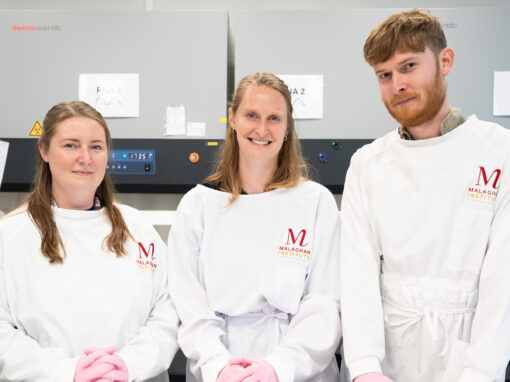
The RNA Development Platform is co-hosted by Te Herenga Waka—Victoria University of Wellington and Waipapa Taumata Rau, University of Auckland, with the Malaghan Institute of Medical Research and the University of Otago as partners. With funding from the Ministry of Business, Innovation and Employment (MBIE) of $70 million over a period of seven years, the platform is aimed at enhancing Aotearoa New Zealand’s capability in the development and production of RNA technologies.
Professor Gary Evans, Director, Te Kāuru—Ferrier Research Institute and co-director of the RNA development platform, says that RNA technology is emerging as a powerful medium, which can address a wide range of issues when set up in a scalable, sustainable manner.
“This milestone, of the 500th product, reiterates the RNA platform’s—and New Zealand’s—capabilities in the rapidly-advancing area of RNA research and innovation.
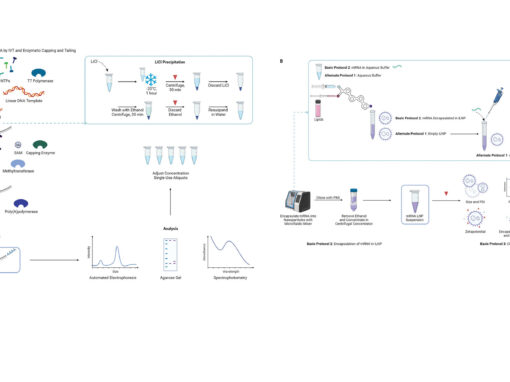
In the last couple of years, we’ve seen a lot of progress in optimising the process of RNA production and encapsulation using lipid nanoparticles. The biotech sector in New Zealand is at a very exciting stage, and there are multiple opportunities for us to scale up manufacturing in the sector. All of us involved with the RNA Platform are keen to be part of this growth story, and the economic development associated with this growth”, he said.
An mRNA vaccine was one of the options explored by Vaccine Alliance Aotearoa New Zealand (VAANZ) in 2021-2022 to develop a COVID-19 vaccine for New Zealand. Over 200 vaccines were produced and tested, as part of a programme of research led by the Malaghan Institute of Medical Research. The mRNA vaccines proved to be an excellent modality that could be developed in case of another pandemic. The possibility of adapting and producing the vaccine using existing infrastructure and processes, which demonstrated quick results, led in part to the RNA Platform being funded by the MBIE.
The role played by RNA technologies in vaccine development has created significant opportunities for the technologies to be used in novel therapeutics, diagnostics, and vaccines relevant to New Zealand and the world and with applications in other fields, including animal health and agriculture.